
We’re very excited to announce the winners of 2025’s Best of the Northwest Awards!
***
Journalism Winner: The Great North American Wild Goose Chase
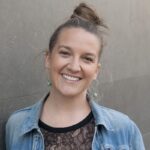 The winning piece for the journalism category was Sarah Trent’s “The Great North American Wild Goose Chase,” originally appearing in Audubon Magazine. With evocative scene-setting and careful attention to both scientific complexity and Indigenous perspectives, we felt Trent delivered environmental journalism that is both locally grounded and globally significant.
Story Behind the Story: About the piece, Sarah said: “In 2020, I visited New Mexico’s Bosque del Apache Wildlife Refuge, and was in total awe over the tens of thousands of snow geese that flock there each winter. Another birder mentioned that the species was something of a recovery story, benefiting from climate change, and I immediately started researching! The more complicated I realized the story was, the more intrigued I became: Their “recovery” across the Central U.S. has become a devastating overabundance, affecting ecosystems, farmers, and the species itself. And, though biologists have been pushing for solutions for 50 years, little has been done to slow the geese down. Audubon sent me and Anchorage-based photographer Nathaniel Wilder to Alaska’s North Slope to cover what all this means now for the Western Arctic and Pacific Flyway states, where the birds’ westernmost populations are newly expanding. Getting to experience this beloved, confounding species on both sides of its migration route (including around the PNW) is one of the highlights of my career to date.”
About Sarah: Sarah Trent is a freelance environmental journalist covering the ways everyday people are impacted by or responding to climate change and environmental degradation. She’s particularly drawn to narratives involving conservation, biodiversity, recreation, agriculture, natural disasters, and climate solutions. Her work has appeared in Audubon Magazine, High Country News, Outside, Sierra Magazine, The New York Times, Wall Street Journal, and more. A graduate of U.C. Berkeley’s School of Journalism, she lives in Vancouver, Washington, where she spends her free time birding and bicycling.
***
Institutional Winner: Rewilding the Klamath
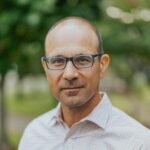 The winner for the institutional writing category was Sean Nealon’s “Rewilding the Klamath,” originally published in the Oregon Stater. We felt the piece stood out for its vivid on-the-ground reporting, the breadth of its sourcing, and its ability to make a $500 million infrastructure story feel both urgent and deeply human.
Story Behind the Story: Sean writes: “I wrote this piece because it highlights one of the most significant environmental stories of the day, unfolding just a few hours from my home, and because Oregon State University scientists have a long history of research in the region. I was fortunate to make several trips along the river, traveling from its mouth to its headwaters, and meeting with scientists, community leaders and Tribal members along the way. The landscape is stunning, marked by scars from the past, yet it now shows remarkable signs of recovery.”
About Sean: Sean Nealon is a science writer and editor and media relations manager at Oregon State University. His work at OSU has taken him all over the state, from Astoria to Ontario to following the remote roads along the Klamath River. Prior to arriving at OSU in 2017, Sean worked in communications for the University of California, Riverside and as a newspaper reporter in Southern California and New York for nearly 10 years. He is originally from Buffalo, New York.
***
Multimedia Winner: Scientists use magnetic heat to cook and destroy tumors
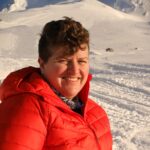 The winner in the multimedia category was Jes Burns’ “Scientists use magnetic heat to cook and destroy tumors” for Oregon Public Broadcasting (All Science. No Fiction.). We felt the piece exemplified solutions-focused science journalism, balancing laboratory process, personal motivation, and the broader context of disparities in women’s health research funding.
Story Behind the Story: Jes writes: “Part of the reason I was drawn to this story is because of the focus on women’s health. It’s rare to see a group for researchers so focused on conditions such as ovarian cancer and endometriosis. The research funding disparity has been stark. But this OSU/OHSU lab has pushed boundaries, developing bespoke nanoparticles that are pushing the idea of treatment via magnetic hyperthermia closer to a clinical reality. Also, I was very excited to get the chance to build and host a show from inside a giant uterus.”
About Jes: Jes Burns is a science reporter at Oregon Public Broadcasting and producer of the Northwest science show All Science, No Fiction. Her work has also been seen/heard on Oregon Field Guide, Science Friday, the BBC’s Unexpected Elements, PBS NewsHour, NPR’s Morning Edition and Marketplace. She’s won many awards for her reporting, including numerous regional Emmys and a AAAS Kavli Science Journalism Award.
***
This year’s awards were judged by Clayton Aldern, Virginia Gewin, and Barbara Goldoftas. The Best of Northwest Awards recognize and celebrate outstanding writing published by our members each year.