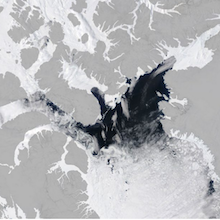
by Chris Tachibana | Feb 2, 2020 | ScienceWire
A polynya, writes freelance journalist Julia Rosen, is an open expanse of water—an oasis—amid sea ice. Julia (@1juliarosen) won the 2019 Best of the Northwest Science Writing Award for Journalism for her story, “Oasis of Open Water” in @hakaimagazine....
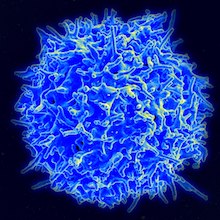
by Chris Tachibana | Feb 2, 2020 | ScienceWire
Susan Keown takes us through the twists and turns of a clinical mystery—why a cancer that responded to T-cell immunotherapy became resistant. Susan (@sejkeown) won the 2019 Best of the Northwest Science Institutional Writing Award for her story, “Revealing a new way...
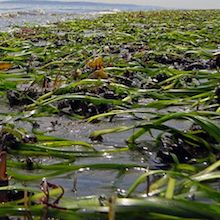
by Chris Tachibana | Feb 2, 2020 | ScienceWire
Kimberly Cauvel shows off our local blue carbon—meaning ocean and coastal carbon-sequestering systems—with a story about eelgrass meadows in the Skagit wetlands. “Seeing Blue,” Kimberly’s story in the Skagit Valley Herald, was the Honorable Mention for our 2019 Best...

by Chris Tachibana | Feb 2, 2020 | ScienceWire
Wayne Gillam wrote the Honorable Mention story for the 2019 Best of the Northwest Science Institutional Writing Award. Wayne’s feature for the University of Washington Center for Neurotechnology (@ctr4neurotech) is “New approach to spinal cord rehabilitation creates...

by Chris Tachibana | Jan 1, 2020 | ScienceWire
How do doctors around the world agree on a complex disease? Michele Solis digs into the history of schizophrenia to find out. Michele reports for Distillations from @SciHistoryOrg on how a disease that is diagnosed by behavior was internationally defined. It took a...
by Chris Tachibana | Jan 1, 2020 | ScienceWire
For the New York Times, Wudan Yan leads us through a medical mystery: Why was an otherwise healthy man in Scotland unable to get over what seemed like a simple respiratory infection? Read Wudan’s story in @NYTHealth to find out. And hypochondriacs—Beware. For more,...
