
by Susan Keown | Nov 5, 2021 | ScienceWire
New NSWA member Evan Bush (@evanbush) reports for NBC News on research that shows just how vulnerable the increasing numbers of people living in cities are to extreme heat and humidity driven by climate change. Since 1983, global extreme heat exposure in cities nearly...
by Susan Keown | Nov 5, 2021 | ScienceWire
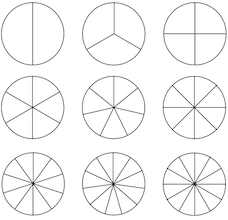
As a child in math class, KC Cole (@kccole314) found satisfaction in canceling, the process of reducing fractions to the smallest denominator. In her recent first-person essay for Wired, Cole reflects on the connection between basic arithmetic concepts and humans’...
by Susan Keown | Nov 5, 2021 | ScienceWire
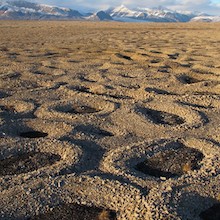
Strange patterns can arise in the pebbly ground of cold landscapes. Now, writes Hannah Hickey (@hickeyh), scientists can explain how these patterns of circles, lines or gently undulating shapes form. The rocks are slowly pushed into place by the random growth of...

by Susan Keown | Nov 5, 2021 | ScienceWire
Love pizza? Really love pizza? Then you’re in luck. NSWA member Stephanie Swane is the publisher for Modernist Cuisine (@ModCuisine), which just put out its latest, “Modernist Pizza.” The multi-volume work covers the history and science of this delightful dish, the...
by Susan Keown | Oct 5, 2021 | ScienceWire
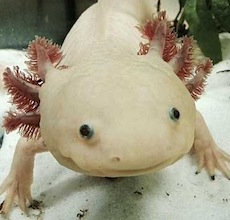
For NPR’s Short Wave podcast, Berly McCoy (@travlinscientst) and colleagues bring us the axolotl, a friendly-looking aquatic animal that has held a place of cultural importance for two thousand years in the area now known as Mexico City. These salamanders have several...
by Susan Keown | Oct 5, 2021 | ScienceWire
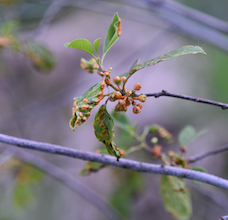
Carolyn Bernhardt (@CarolBernie11) writes for the University of Minnesota about a project to investigate whether rust fungi can successfully manage two major invasive plant species that came to the state from Europe: glossy buckthorn and reed canarygrass. While some...
